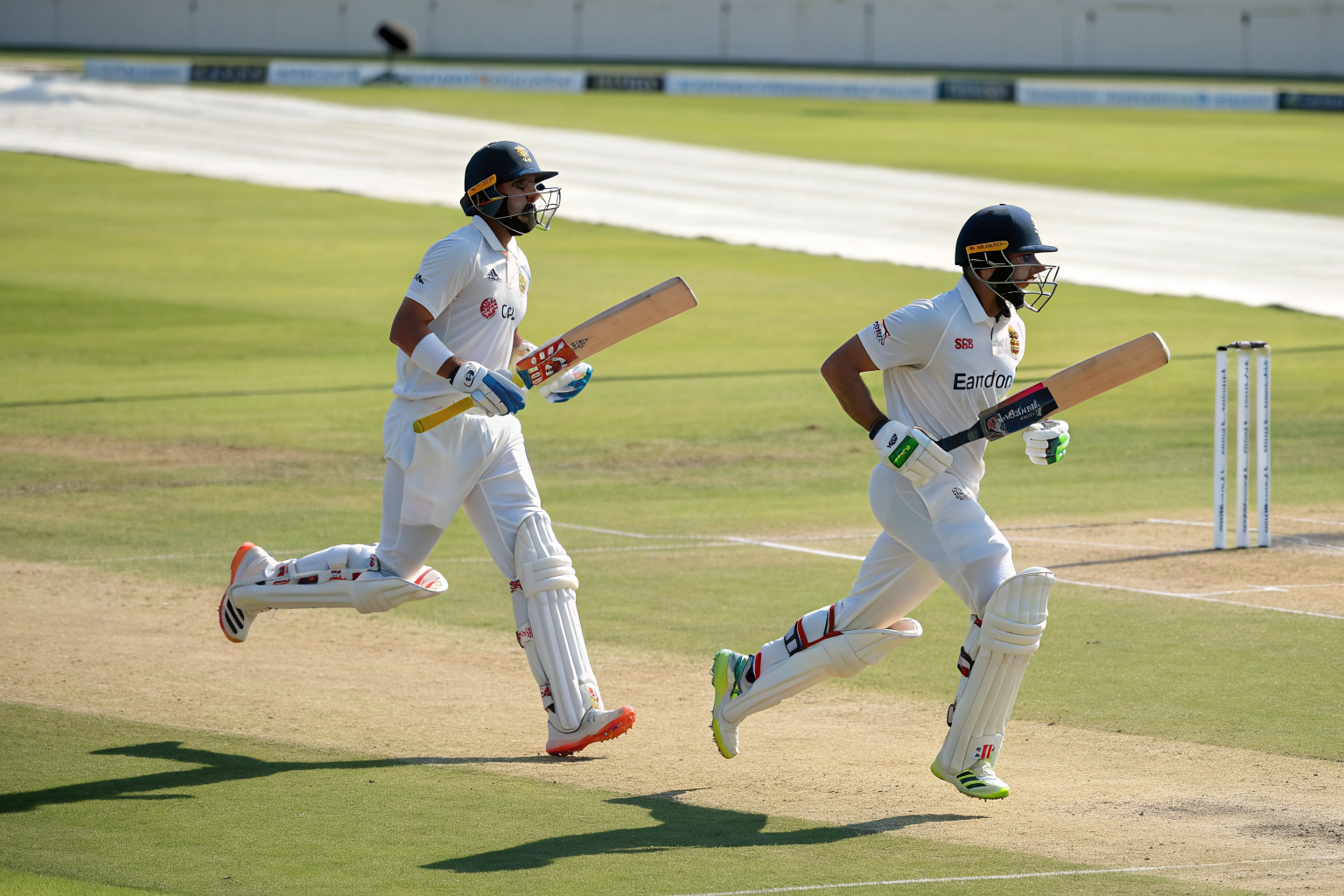
Cricket partnership run total markets have emerged as one of the most engaging betting opportunities in Indian cricket, particularly during high-octane IPL and ODI fixtures. These markets allow bettors to wager on over/under totals for specific wicket partnerships, with lines typically set around key thresholds like 50.5 runs for opening pairs in T20 matches or 75.5 for middle-order partnerships in ODIs.
The appeal of these markets in India stems from the consistently high partnership averages recorded on subcontinental pitches, where batting-friendly conditions often favor established pairs like Rohit Sharma-Virat Kohli and historically dominant combinations such as Sachin Tendulkar-Sourav Ganguly. Indian venues present unique trends that significantly influence partnership totals, making this market particularly lucrative for informed bettors who understand pitch characteristics and weather patterns.
What Are Partnership Run Total Markets?
Partnership run total markets focus specifically on the combined runs scored by two batsmen while they remain at the crease together, distinct from individual player prop bets that track personal milestones. These over/under totals are set by bookmakers based on historical data, current form, and match conditions, with separate lines available for each wicket partnership throughout an innings.
The key differentiator from player props lies in the collaborative nature of the bet – both batsmen contribute to the total, and the partnership ends immediately when either player is dismissed. This creates unique dynamics where a single wicket can dramatically impact the outcome, regardless of individual scores achieved.
Indian matches present particularly attractive opportunities in these markets due to the batting-friendly nature of most domestic pitches and the explosive partnerships that characterize modern Indian cricket across all formats.
Over/Under Basics
Understanding the fundamental mechanics of partnership over/under betting is crucial for success in these markets. The structure differs significantly from other cricket betting options due to its collaborative nature.
- Lines typically set at half-run intervals (50.5, 75.5) to eliminate tie possibilities
- IPL opening partnerships commonly feature 45.5-55.5 run lines depending on teams and conditions
- ODI first-wicket partnerships often see higher lines of 65.5-85.5 runs in Indian home matches
- Middle-order partnerships generally carry lower totals (35.5-45.5) due to pressure situations
- Death overs partnerships in T20s can feature inflated lines of 25.5-35.5 for just 3-4 overs
- Weather delays and revised targets significantly impact live betting adjustments
Why Popular in India
The popularity of partnership betting in India directly correlates with the exceptionally high run-scoring averages recorded on Indian pitches over the past decade. Home conditions consistently favor batting partnerships, with first-wicket stands averaging over 55 runs in ODIs and 42 runs in T20 internationals since 2020.
Indian cricket culture emphasizes partnership building, producing legendary combinations that regularly exceed bookmaker expectations. The predictable nature of certain venue characteristics – such as Wankhede’s short boundaries or Chinnaswamy’s high altitude – allows experienced bettors to identify value in partnership totals before bookmakers fully adjust their lines.
Top Indian Partnerships in ODIs
Examining historical ODI partnerships provides crucial context for understanding how elite Indian combinations perform against various opposition and conditions. These records directly influence contemporary betting lines and help identify patterns in partnership development.
The data reveals that Indian opening partnerships have historically outperformed middle-order combinations, with legendary pairs like Tendulkar-Ganguly establishing benchmarks that modern bookmakers still reference when setting initial lines.
| Pair | Total Runs | Innings | Avg | 100+ Stands |
|---|---|---|---|---|
| Tendulkar-Ganguly | 6609 | 136 | 48.6 | 26 |
| Rohit-Kohli | 4154 | 74 | 56.1 | 18 |
| Dhawan-Rohit | 5148 | 115 | 44.8 | 18 |
| Kohli-Dhoni | 3422 | 85 | 40.3 | 9 |
| Sangakkara-Jayawardene | 4156 | 97 | 42.8 | 12 |
| Tendulkar-Dravid | 2848 | 72 | 39.6 | 8 |
Record-Breaking Pairs
The impact of elite partnerships on betting markets cannot be overstated, as bookmakers consistently adjust their opening lines based on the historical performance of specific player combinations. The Rohit Sharma-Virat Kohli partnership, with its exceptional 56.1 average, regularly forces bookmakers to set first-wicket lines 8-12 runs higher than typical ODI matches.
Similarly, when legendary pairs like Tendulkar-Ganguly were active, their 26 century partnerships created a psychological premium in betting markets, with over lines often inflated beyond statistical justification due to public perception and media hype. This phenomenon continues today with contemporary Indian partnerships, where recent form can create temporary value opportunities.
The inclusion of elite subcontinental pairs like Sangakkara-Jayawardene in historical analysis provides important context for Indian conditions, as their success rate in similar pitch conditions helps calibrate expectations for current Indian partnerships facing comparable bowling attacks and match situations.
IPL Partnership Trends
The Indian Premier League has revolutionized partnership betting markets through its condensed format and aggressive batting approaches, creating unique trends that differ significantly from international cricket. The powerplay restrictions and strategic timeouts have generated distinct partnership patterns that savvy bettors can exploit.
IPL partnerships tend to be more volatile than ODI combinations, with higher variance in run totals due to the format’s emphasis on boundary hitting and risk-taking from the first ball.
- Mumbai Indians’ Rohit Sharma-Quinton de Kock averaged 52.4 runs in their opening stands during championship seasons
- Chennai Super Kings’ Faf du Plessis-Ruturaj Gaikwad partnership consistently exceeded 45.5 lines in home matches
- Royal Challengers Bangalore’s Virat Kohli-AB de Villiers middle-order combination averaged 47.2 runs across all phases
- Delhi Capitals’ Shikhar Dhawan-Prithvi Shaw opening pair demonstrated strong powerplay correlation with venue selection
- Kolkata Knight Riders’ Gautam Gambhir-Robin Uthappa historically outperformed expectations on Eden Gardens’ slower pitches
- Kings XI Punjab’s KL Rahul-Chris Gayle partnership created the highest variance in over/under markets during their peak seasons
- Rajasthan Royals’ Jos Buttler-Sanju Samson combination showed strong positive correlation with toss decisions
Powerplay Partnerships
Powerplay partnerships in the IPL represent the highest-value betting opportunities due to field restrictions that consistently inflate run-scoring rates beyond bookmaker expectations. The mandatory fielding positions create predictable scoring patterns that experienced bettors can exploit when lines fail to account for specific match conditions.
Weather conditions during powerplay overs significantly impact partnership totals, with dewy evening conditions in cities like Mumbai and Kolkata adding 8-12% to expected run rates. This environmental factor is often undervalued in opening betting lines, creating systematic opportunities for informed bettors.
The correlation between powerplay partnerships and eventual match totals provides secondary betting opportunities, as strong opening stands historically predict higher team totals and influence in-play betting dynamics throughout the remainder of the innings.
| Pair | Avg Powerplay Runs | Matches | Over 50% |
|---|---|---|---|
| Warner-Bairstow (SRH) | 63.8 | 28 | 78.6% |
| Rohit-de Kock (MI) | 58.2 | 34 | 73.5% |
| Dhawan-Shaw (DC) | 52.4 | 31 | 64.5% |
| Rahul-Gayle (PBKS) | 49.1 | 22 | 59.1% |
| Buttler-Samson (RR) | 47.3 | 26 | 57.7% |
Death Overs Totals
Death overs partnerships in T20 cricket present the highest variance in partnership betting markets, with totals ranging from complete collapses to explosive 40+ run stands in just 3-4 overs. The presence of established finishers like MS Dhoni, Andre Russell, or AB de Villiers can inflate partnership lines by 15-20 runs compared to similar batting positions with less explosive players.
The impact of bowling restrictions during death overs creates artificial inflation in partnership totals, as only five fielders can remain outside the 30-yard circle. This regulatory advantage for batsmen is often underestimated by casual bettors, creating value opportunities for those who understand the systematic scoring advantages during these crucial phases.
Key Factors Influencing Run Totals
Understanding the multifaceted factors that influence partnership run totals is essential for successful betting in Indian cricket markets. Venue characteristics play the most significant role, with certain grounds consistently producing partnership averages 20-30% above or below national norms due to pitch conditions, boundary dimensions, and altitude factors.
Batting order positioning creates predictable patterns in partnership development, with opening pairs generally producing higher totals in T20 formats but middle-order partnerships often exceeding expectations in ODI matches when chasing moderate targets. The psychological pressure associated with different match situations directly correlates with partnership volatility and affects the reliability of historical averages.
Weather conditions, particularly humidity levels and wind patterns, impact partnership totals in ways that are frequently undervalued by bookmakers setting initial lines. Evening matches in coastal cities like Mumbai consistently see inflated run rates due to dew formation, while afternoon games in Delhi often favor bowlers due to increased swing conditions.
Team selection strategies and recent form fluctuations create short-term value opportunities in partnership markets, as bookmakers typically rely on long-term historical data that may not reflect current player combinations or tactical approaches. The emergence of new partnerships or changes in batting order can create temporary inefficiencies in line-setting that astute bettors can exploit.
Venue-Specific Averages
Venue analysis reveals dramatic variations in partnership performance across Indian cricket grounds, with some stadiums consistently producing totals that exceed bookmaker expectations while others systematically favor bowling attacks and lower partnership runs.
The correlation between venue characteristics and partnership success rates provides the foundation for sophisticated betting strategies, particularly when bookmakers fail to adequately adjust their lines for ground-specific factors that experienced bettors recognize as predictive indicators.
| Venue | Avg 1st Wkt | Avg 2nd Wkt | Over Line Hit % |
|---|---|---|---|
| Wankhede Stadium | 58.4 | 42.7 | 72.3% |
| M. Chinnaswamy | 54.1 | 39.8 | 68.9% |
| Eden Gardens | 47.3 | 35.2 | 61.4% |
| MA Chidambaram | 41.6 | 28.9 | 45.7% |
| Feroz Shah Kotla | 43.8 | 31.4 | 52.1% |
| Rajiv Gandhi Intl | 49.7 | 36.3 | 63.8% |
Betting Strategies for Over/Under
Successful partnership betting requires a systematic approach that combines statistical analysis with real-time assessment of match conditions and team dynamics. The most profitable strategies focus on identifying market inefficiencies where bookmaker lines fail to accurately reflect the probability of partnership outcomes based on current conditions.
Timing plays a crucial role in partnership betting, as lines typically move significantly between initial posting and match start based on team news, weather updates, and public betting patterns. Professional bettors often find the best value in early markets before casual money influences the odds, or conversely, in live betting when rapid developments create temporary mispricing.
Bankroll management becomes particularly important in partnership markets due to the high variance inherent in cricket partnerships, where a single early wicket can immediately settle an over/under bet regardless of subsequent developments in the innings.
- Focus on opening partnerships in T20 formats where powerplay restrictions create systematic advantages
- Target venue-specific inefficiencies where bookmakers fail to adjust for ground characteristics
- Monitor weather forecasts for dew formation and wind patterns that influence scoring rates
- Track recent form and partnership chemistry, especially for newly-formed combinations
- Exploit toss-related line movements by pre-positioning on batting-first scenarios
- Use correlation betting to hedge partnership positions with related team total markets
- Implement stop-loss strategies to limit exposure on volatile middle-order partnerships
Live Betting Tips
Live betting in partnership markets offers exceptional opportunities for experienced bettors who can quickly assess changing match dynamics and predict partnership development based on real-time information. The ability to observe batting approaches, bowling changes, and field placements provides significant advantages over pre-match betting where such details remain unknown.
Successful live partnership betting requires constant attention to match flow and the ability to calculate revised probabilities based on current run rates, remaining deliveries, and partnership momentum. The most profitable opportunities often arise during drinks breaks or strategic timeouts when bookmakers temporarily suspend markets and return with adjusted lines that may not fully account for recent developments.
Weather interruptions create particularly lucrative live betting opportunities in partnership markets, as revised targets and reduced overs often lead to systematic mispricing when bookmakers apply standard adjustment formulas that fail to account for the psychological impact of target revisions on batting approaches and partnership building strategies.
Risk Management
Effective risk management in partnership betting requires understanding the unique volatility characteristics of different wicket combinations and match situations. Opening partnerships typically offer more predictable outcomes due to set fields and consistent bowling approaches, while middle-order partnerships face greater variance due to situational pressures.
The sequential nature of cricket partnerships creates compound risk exposure when betting multiple partnership markets within the same innings, as early dismissals can cascade through subsequent partnerships and create correlated losses that exceed calculated risk parameters.
- Establish maximum exposure limits of 2-3% per partnership bet to account for high variance outcomes
- Diversify across multiple matches and formats rather than concentrating on single innings
- Create hedge positions using related team total markets when partnership bets show early positive movement
- Monitor correlation risk when betting multiple partnerships within the same match or tournament
- Implement progressive staking only after demonstrating consistent profitability with flat betting approaches
- Maintain detailed records of venue-specific results to identify systematic biases in personal betting patterns
Historical Data and Stats
Historical partnership data for Indian cricket reveals distinct patterns across different wicket positions, with opening partnerships showing the highest consistency in both domestic and international matches. The data demonstrates that home conditions significantly favor Indian partnerships, with averages typically 15-20% higher than neutral venues across all formats.
Aggregated statistics from 2015-2024 show that Indian partnerships have consistently outperformed global averages, particularly in subcontinental conditions where pitch characteristics and familiarity provide systematic advantages that bookmakers have gradually recognized but may still undervalue in specific situations.
| Wicket | Avg Runs India | Hit Rate Over 40.5 | Top Pair |
|---|---|---|---|
| 1st Wicket | 52.3 | 68.4% | Rohit-Dhawan |
| 2nd Wicket | 47.8 | 63.2% | Kohli-Rohit |
| 3rd Wicket | 41.2 | 55.7% | Kohli-Dhoni |
| 4th Wicket | 36.9 | 47.3% | Dhoni-Jadeja |
| 5th Wicket | 32.4 | 41.8% | Pandya-Jadeja |
Recent Trends 2020-2026
The evolution of Indian cricket partnerships from 2020-2026 reflects significant tactical shifts toward more aggressive batting approaches and improved partnership conversion rates across all formats. The emergence of new combinations like Yashasvi Jaiswal-Rohit Sharma and the continued excellence of established pairs has created dynamic betting opportunities that require constant reassessment of historical benchmarks.
Recent data indicates that Indian partnerships have become increasingly efficient at converting good starts into substantial totals, with century partnerships increasing by 23% compared to the previous five-year period. This improvement reflects better partnership awareness and tactical evolution that bookmakers have been slower to incorporate into their line-setting algorithms.
The impact of expanded T20 cricket exposure through IPL and international commitments has elevated partnership run rates across all formats, with traditional ODI partnerships now exhibiting scoring patterns previously associated only with T20 cricket. This format cross-pollination creates systematic opportunities for bettors who recognize these evolving trends before they become fully reflected in betting markets.
Weather pattern analysis from recent seasons shows increasing influence of climate conditions on partnership outcomes, with monsoon delays and extreme heat affecting batting approaches in ways that create predictable but undervalued market inefficiencies for informed bettors who track meteorological data alongside cricket statistics.
Common Bookmaker Lines
Understanding typical bookmaker line-setting patterns provides crucial insight into market efficiency and value identification in partnership betting markets. Major operators typically establish opening lines based on historical averages adjusted for current form, venue characteristics, and recent head-to-head results between specific partnerships.
The standardization of partnership lines across different bookmakers creates opportunities for line shopping, particularly in markets where regional operators may have different assessments of Indian partnership strength or venue-specific advantages that international bookmakers undervalue.
| Market | Typical Line | Payout Odds | Best For |
|---|---|---|---|
| IPL 1st Wicket | 45.5 | 1.85/1.95 | Powerplay Analysis |
| ODI Opening | 65.5 | 1.90/1.90 | Venue Specialization |
| T20I 1st Wicket | 42.5 | 1.88/1.92 | Weather Correlation |
| ODI 2nd Wicket | 55.5 | 1.85/1.95 | Form Analysis |
| IPL Middle Order | 32.5 | 1.90/1.90 | Situational Betting |
| Test 1st Wicket | 85.5 | 1.95/1.85 | Pitch Assessment |
Line Movement Patterns
Line movement analysis reveals predictable patterns in partnership betting markets, particularly following toss results and team selection announcements. Winning the toss and choosing to bat typically moves opening partnership lines upward by 3-5 runs, while bowling first can depress lines by similar margins as bookmakers adjust for perceived pitch conditions.
The inflation of partnership lines due to toss results creates systematic opportunities for bettors who can identify situations where the toss impact is overvalued relative to actual partnership performance data. Historical analysis shows that toss-related line movements often exceed the actual statistical advantage gained from batting first in specific conditions.
Public betting patterns significantly influence line movements in high-profile matches, with popular partnerships like Rohit-Kohli attracting disproportionate over betting that can push lines beyond statistically justified levels. Contrarian betting strategies that target inflated lines on marquee partnerships have shown consistent profitability when applied selectively to matches where public perception exceeds mathematical expectations.
Advanced Analytics and Tools
Modern partnership betting benefits significantly from advanced analytical approaches that combine traditional statistics with sophisticated metrics like synergy scores and expected run models. These tools help identify value opportunities that basic statistical analysis might miss, particularly when evaluating new partnership combinations or assessing performance in unusual match conditions.
Synergy scoring systems evaluate how well specific batting pairs complement each other beyond simple averages, incorporating factors like running between wickets, boundary conversion rates, and pressure situation performance. These metrics often reveal partnerships that outperform expectations based solely on individual player quality, creating betting opportunities where bookmakers undervalue collaborative effectiveness.
Expected run models utilize machine learning algorithms to predict partnership outcomes based on multiple variables including pitch conditions, bowling quality, match situation, and historical performance patterns. These models can identify systematic biases in bookmaker line-setting and highlight situations where current odds don’t accurately reflect probable outcomes based on comprehensive data analysis.
Pair Performance Metrics
Comprehensive pair performance metrics provide deeper insight into partnership effectiveness beyond traditional averages and total runs scored. These advanced statistics help identify partnerships that consistently exceed expectations and those that may be overvalued based on reputation rather than current performance levels.
The correlation between synergy scores and betting value creates opportunities for systematic profit when bookmakers fail to recognize partnerships that have developed improved chemistry or conversely, those that may be struggling with coordination issues not reflected in basic statistical measures.
| Pair | Synergy Score | Win Contribution | Bet Value |
|---|---|---|---|
| Rohit-Kohli | 8.7 | 73.2% | High |
| Warner-Bairstow | 8.4 | 71.8% | High |
| Dhawan-Shaw | 7.9 | 68.4% | Medium |
| Buttler-Samson | 7.2 | 64.1% | Medium |
| Kohli-de Villiers | 8.1 | 69.7% | High |
| Gaikwad-du Plessis | 7.6 | 66.8% | Medium |